
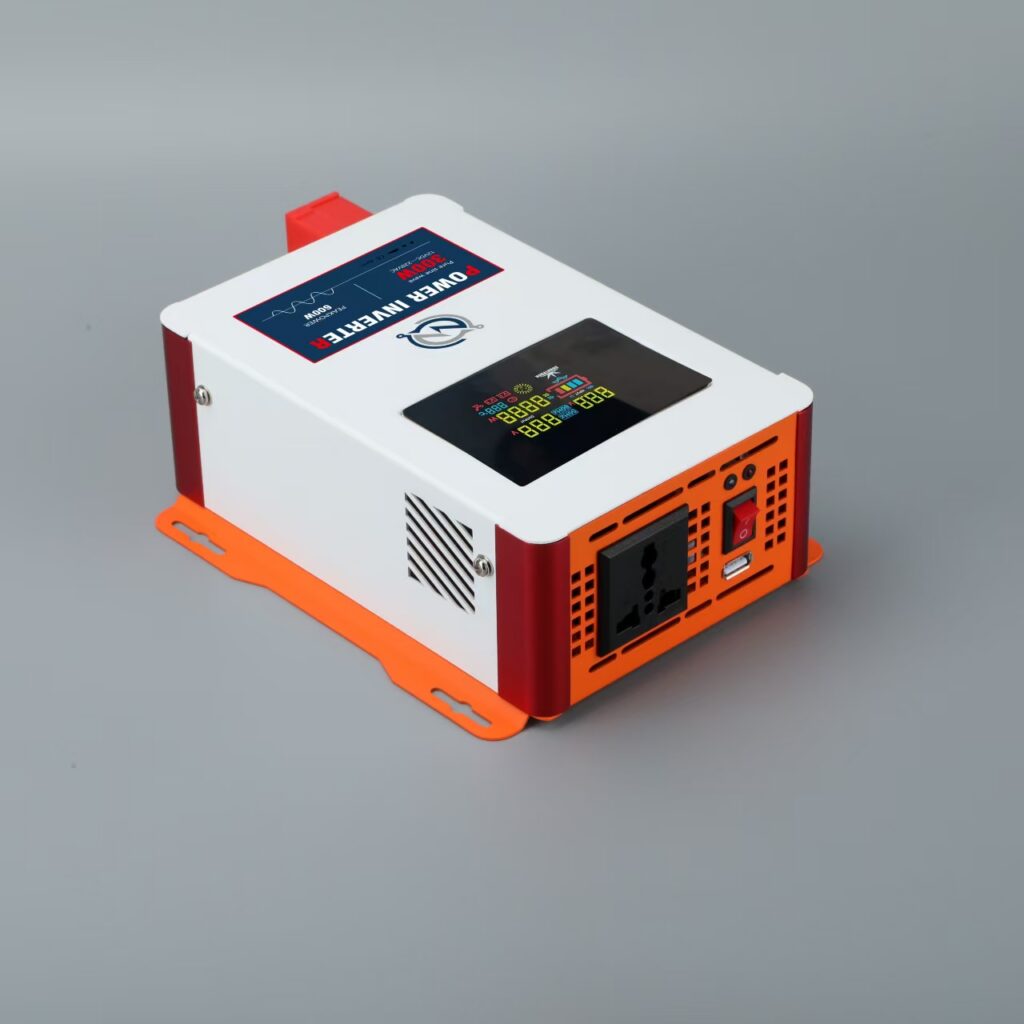
Identify the exterior reference without treating appearance as a specification
An inverter-enclosure appearance enquiry should connect the offered article to an identifiable supplier photograph, file or sample reference and retain the scope of that relationship. Keep visible appearance separate from verified construction and electrical properties. A catalogue photograph does not independently establish housing material, a finish process, ratings or performance. Record an unanswered reference question rather than completing the specification through assumptions about how the device looks.
The official product reference shows a white, orange and red inverter at an oblique angle, with a display and an end area visible. Printed values and marks remain catalogue references rather than independently tested output or certification evidence. This article concerns exterior appearance and sample identity. Separating rated and peak power is a different purchasing task and should not be treated as resolved by selecting a photograph or an appearance reference.
Begin with the actual article and the reference type
Send the product link and the supplier’s article or quotation-version reference. Ask which exterior appearance reference applies to that offer. Preserve an identifier actually supplied. If the response contains a photograph, describe it as a photograph rather than a retained physical sample. If the supplier identifies a sample, keep that identity and the stated offer relationship without assuming that every similar catalogue product or later version is covered.
Ask what the response selects. It might identify a general catalogue appearance, an article-specific reference or another stated scope. These are different relationships, even when the image looks familiar. Record the actual answer instead of treating “same appearance” as a complete production specification. A useful record connects the supplier response to the offer without claiming that every visible detail has become an independently confirmed technical requirement.
Create an appearance-to-offer map
Record field | Information to request | Boundary to preserve
Inverter offer | Exact article or quotation version | Other catalogue products or variants
Reference identity | Actual photo, file or sample identifier | An unobserved physical sample
Appearance coverage | Exterior area or view identified | Internal construction or electrical properties
Version relationship | Which offer the response covers | Every later unit or unseen revision
Open question | A specific missing relationship | Invented material, finish or performance
This map preserves useful partial answers. A supplier may identify a reference without supplying every appearance relationship or may provide a sample identifier whose offer coverage needs clarification. Keep the answered scope and ask the remaining question separately. Do not fill the table by borrowing a reference from another inverter, treating a filename as a physical colour standard or assuming that similar enclosure photographs establish equivalent electrical versions.
Keep sample evidence separate from catalogue details
If the supplier says a photograph represents an identified sample, retain that attribution while keeping the evidence types distinguishable. A photograph does not independently confirm that a physical sample has been provided. An identified sample also does not establish that every future article will have identical appearance. Ask what relationship the supplier proposes without inventing a numerical tolerance, repeatability guarantee or a custom-colour matching service.
Do not assign a material grade, surface treatment or construction process from the visible colour or shape. A display, terminal-looking feature, fan-like detail or printed marking can locate the article reference without proving the function or specification of that feature. Keep any additional supplier statement attached to its actual source and coverage. The catalogue image should not become an unprovided engineering drawing or an assessment of product suitability.
Separate appearance from electrical and operating questions
The source pages use general product descriptions and repeated marketing wording. Those descriptions should remain attributed rather than be presented as verified waveform, voltage, rated output, peak output, efficiency, cooling or safety evidence. This guide does not establish compatibility with a battery, solar system, vehicle, appliance or market plug. A selected exterior reference should not be used to close those unrelated questions by implication.
This enquiry provides no energized testing, installation, connection, wiring, bypass, charging, repair or operating directions. It asks for a supplier reference, not an action involving the device. If another technical question matters to the purchasing decision, identify it separately and request applicable supplier information. Do not add an unverified method or a product-performance conclusion to make an appearance-selection note sound like a complete technical approval.
Track changes without overwriting the rating record
When the supplier proposes another reference, preserve the earlier one and identify the article or quotation version affected. Ask which relationship the new response replaces or clarifies. Do not assume the reason for the change or silently apply it to every product. A new image can answer a limited appearance question without establishing that the whole device or every printed specification has changed.
Keep the rated-and-peak-power record separate throughout the discussion. A rating clarification does not identify a physical appearance sample, and appearance selection does not verify a rating. Before carrying the map into an order discussion, review its article, reference type and open relationships. Stock, available variants, customization, minimum quantities, pricing and delivery arrangements require their own actual responses rather than assumptions based on a catalogue view.
Frequently asked questions
Does the enclosure photograph verify its material or finish process?
No. It provides a visible product reference. Request the supplier’s applicable statement separately without assigning a grade, treatment, construction method or performance property from the image.
Can a catalogue photo be recorded as the physical sample?
Not without evidence of that relationship. Keep photographs, files and identified samples distinguishable and retain the supplier’s actual attribution and offer coverage.
Does matching appearance establish an equivalent electrical version?
No. Similar enclosure views do not independently establish ratings, waveform, voltage, efficiency, compatibility or safety. Preserve those questions separately rather than inferring them from appearance.
Does selecting the exterior reference approve product operation?
No. This is a procurement-reference enquiry, not an operating or installation guide. It provides no energized testing, wiring, bypass, charging or repair directions.
Use the official product reference to anchor the appearance enquiry and contact the supplier with the exact unanswered fields. Catalogue views and printed marks remain attributed context rather than verified construction, electrical properties, services or supply guarantees.
https://ynbpower.com/product/pure-sine-wave-inverter-85/
https://ynbpower.com/contact/
https://ynbpower.com/blog/